Table of Contents
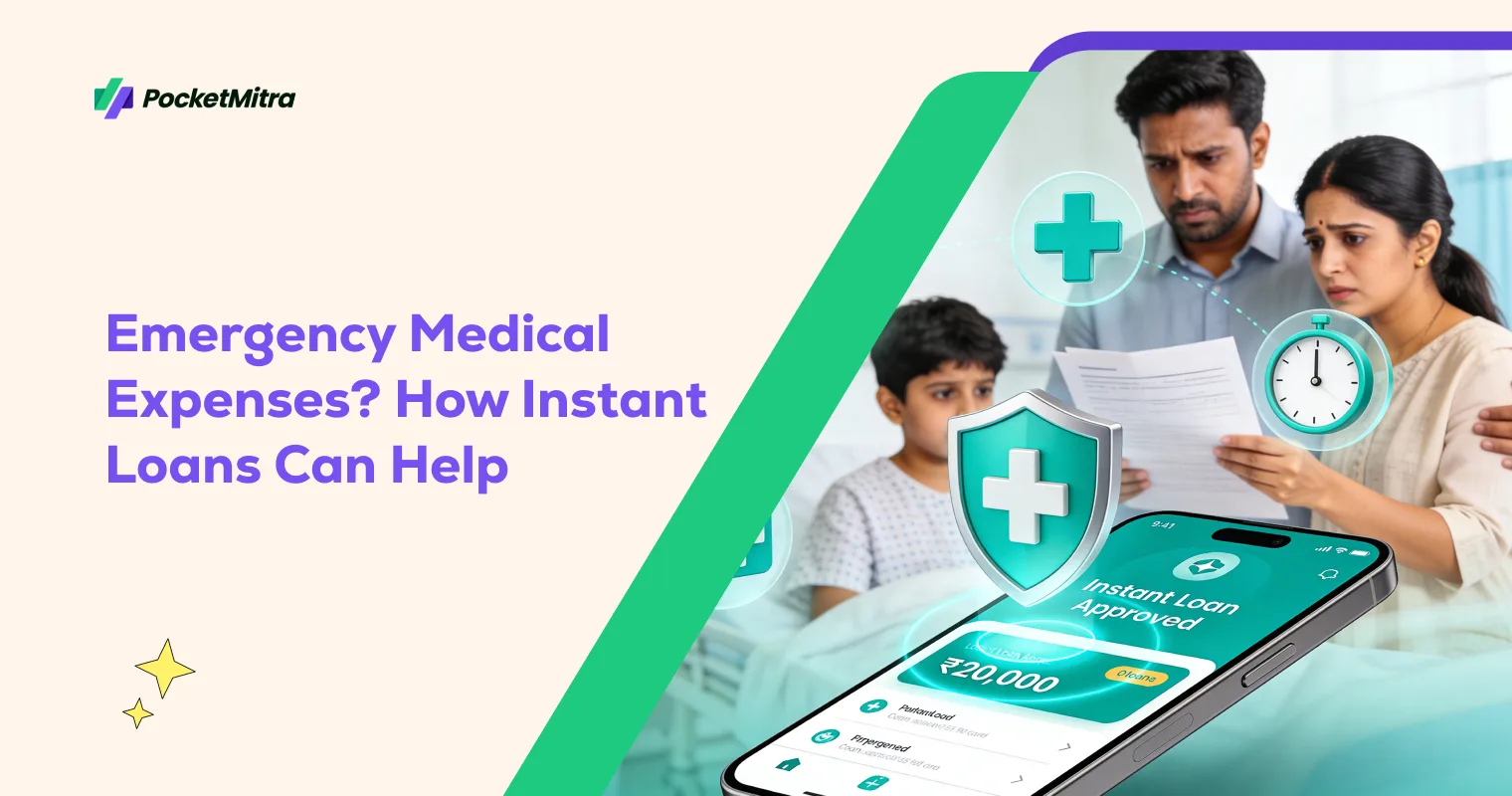
Emergency Medical Expenses? How Instant Loans Can Help
By PocketMitra | Jan 09, 2026
Introduction
Medical emergencies are less likely to come with an early warning system. An unexpected surgery, ICU admission, or diagnostic procedure can upset not only one's health but also one's finances. In situations where savings are inadequate, most families resort to emergency funding solutions to cope with escalating hospital expenses without postponing treatment.
What is a Medical Loan?
A medical loan is a form of unsecured loan that is specifically tailored to meet hospital expenses, surgeries, medications, tests, or follow-up treatments. This type of loan is usually availed as a personal loan for medical expenses, which enables the borrower to get instant access to money without the need to pledge any security.
Unlike other loans that involve time-consuming procedures for loan approval, a loan for medical treatment is all about speed and paperwork. The idea is straightforward: prevent financial limitations from holding back important medical choices.
In India, the increasing rate of healthcare inflation has made the need for such assistance even more pertinent. As per reports, the rising medical expenses have been increasing every year, particularly in private hospitals in metropolitan cities.
When Healthcare Bills Become Financial Emergencies
The inflation in the healthcare sector in India has been higher than the general inflation rate. The medical expenses have been increasing by 12-15% per year, while the general inflation rate has been 4-6% in the past few years. This has made medical expenses much higher. A single hospitalisation can cost between ₹50,000 to several lakhs, depending upon the treatment and hospital.
This is where emergency medical expenses become a source of financial trouble. The savings that were meant for the long-term plans such as children's education or buying a home may need to be spent on the medical treatment.
In these situations, medical expenses loans help as a financial lifeline. They help families to quickly mobilise funds and concentrate on recovery rather than scrambling to raise money at the last minute.
Understanding Instant Loans Before You Apply
Before applying for an instant loan, it is essential to know how instant loans function. Instant loans are generally online, short to medium-term loans that provide instant approval and quick disbursement.
These loans are unsecured, and no collateral is required. The loans are approved on the basis of income evaluation, repayment capacity, and basic verification. This is very beneficial for many applicants, especially those who do not have much documentation.
Some lenders also offer a personal loan for non-salaried individuals, which benefits self-employed individuals, freelancers, and small business owners in case of a medical emergency.
However, the borrower must check the interest rate, repayment term, and total cost of the loan before accepting the loan offer.
Understanding Medical Emergency Loans: Features and Benefits
Medical emergency loans are designed to ensure speed, convenience, and accessibility during emergencies. The first and foremost advantage of medical emergency loans is the quick availability of funds, which can be a matter of life and death during hospitalisations or emergency procedures.
The most significant features and benefits are as follows:
- Quick Disbursal: The loan amount is processed quickly, which helps the family get access to funds without any delay in treatment.
- Flexible Usage: The loan amount can be used for surgery, ICU, tests, medicines, or even rehabilitation after discharge. There are no strict end-use requirements after the loan amount has been disbursed.
- Minimal Documentation: Digital verification ensures less paperwork and quicker approvals, especially when time is of the essence.
- No Collateral Required: This loan is normally unsecured, which means that the borrower will not be asked to provide collateral.
- Protection of Long-Term Savings: Instead of being forced to withdraw fixed deposits or sell investments, families can pay back the loan in installments.
- Transparency and Flexibility: Many people find that the best loan for medical expenses is one that is transparent about its fees, interest rates, and repayment terms that are not too burdensome.
These loans can provide immediate financial relief and assistance in maintaining financial stability if carefully selected.
Key Characteristics Include
While comparing a personal loan for medical purposes, the following factors need to be taken into consideration:
- Tenure options: The tenure options are flexible, ranging from a few months to a year or more. Shorter tenures can reduce the total interest paid but will increase the EMI.
- Loan amounts: The loan amount is variable, depending on eligibility and income. Smaller loans are taken for immediate hospitalisation, while larger loans are taken for larger surgeries.
- Interest rates: The interest rates are variable based on the lender's assessment of credit scores, income stability, and internal assessments. It is always important to check the total repayment amount before finalising.
- Processing time: Instant loans are known for their fast processing, sometimes within a few hours, and the amount is directly credited to the borrower's bank account.
- Documentation: KYC, income documents (if required), and bank account details are required. Most platforms are entirely online.
Eligibility Requirements Simplified
Here is a general list of the common eligibility criteria:
| Criteria | Requirement |
|---|---|
| Age | 18 years and above |
| Citizenship | Indian resident |
| Income Source | Stable monthly income (salaried or self-employed) |
| Bank Account | Active bank account in applicant's name |
| Basic KYC | Aadhaar, PAN and valid contact details |
| Credit Score | Not mandatory, even first-time borrowers may qualify |
Note: Eligibility criteria may differ based on lender policies.
Conclusion
Unforeseen medical emergencies can create pressure on even the best-planned budgets. However, instant loans, if planned properly, can prove to be of immense help during times of crisis. Services like PocketMitra are created to ensure that short-term financial assistance reaches people easily so that their urgent medical needs are fulfilled without any delay.
FAQs
Is a Credit Score Required to Get a Medical Emergency Loan in India?
No, it is not mandatory. Though credit scores are considered by most lenders, some online lenders also check the stability of income and repayment capacity, so first-time borrowers can also apply.
Can I get a medical loan with a low credit score?
Yes, you can. Though it is possible to avail a loan with a low credit score, interest rates may vary based on the credit score.
What Is the Quickest Way to Get a Medical Emergency Loan Approved in India?
The quickest method for loan approval is through a completely online platform with proper documentation. This will help in ensuring that there are no delays in the approval procedure.
What's the Minimum Age Limit for Applying for an Instant Loan?
The applicant must be at least 18 years old and an Indian citizen with a valid bank account and identity cards.
What documents are needed?
The basic KYC documents such as Aadhaar and PAN cards are required. Some lenders may also require income proof or bank statements.