Table of Contents
How to Improve Your Credit Score Before Applying for a Loan
By PocketMitra | December 04, 2025
Overview Of Credit Score
There are days when you might fall short on money for your sudden needs.
Picture this: you need ₹15,000 fast for your best friend's immediate health emergency. You apply for an instant personal loan, but your application gets rejected.
Why? Because your credit score is 600.
And you are left wondering, "What is a credit score, and what are the ways to boost credit score quickly?"
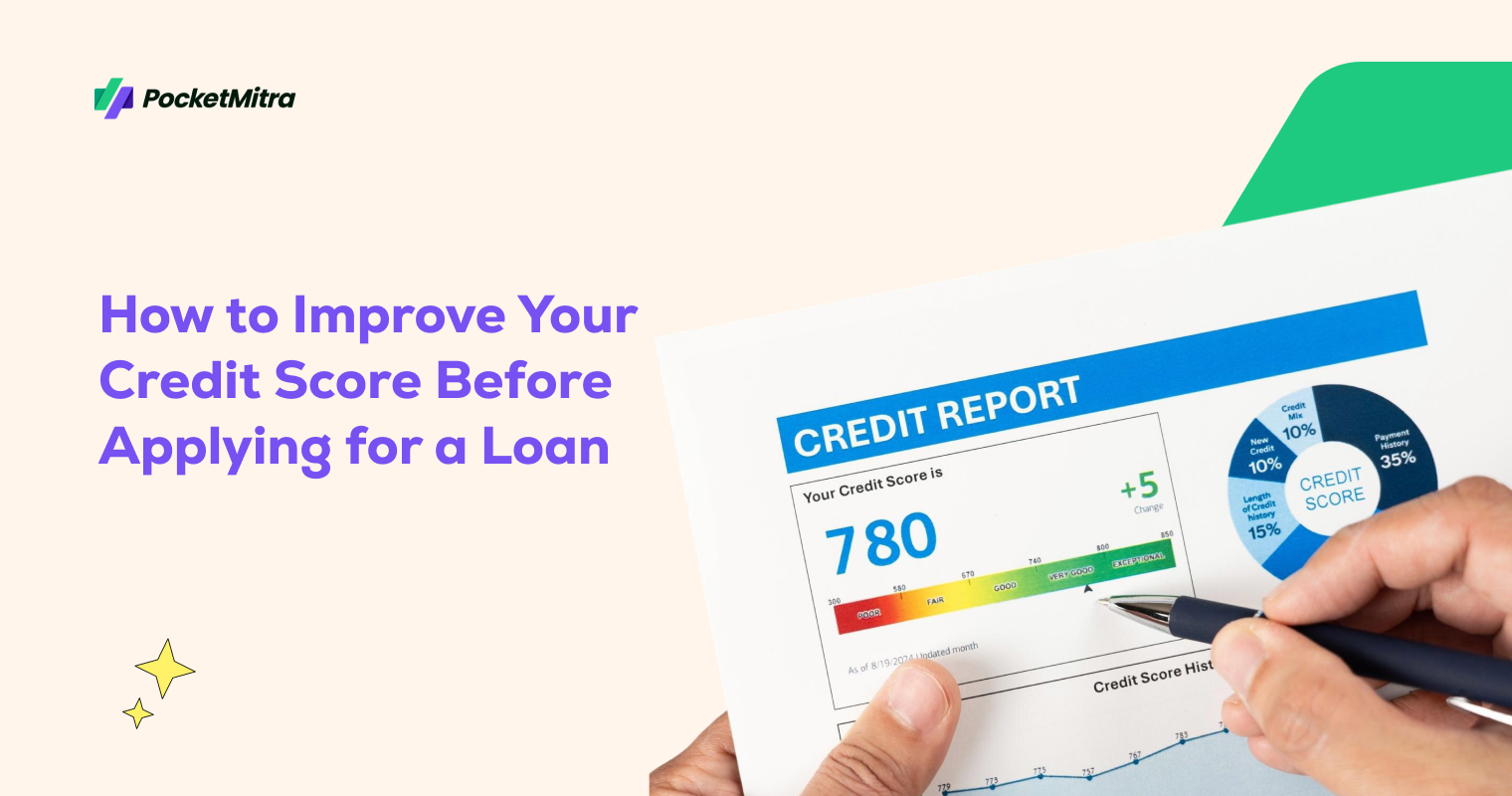
Your credit score or CIBIL score is a three-digit number between 300 and 900, informing lenders about how reliably you repay borrowed money.
In this blog, we will show you simple habits to build a good credit score.
But first…
What is a Good Credit Score?
Just like you got a 'star or excellent rating' each time you did well in your school work, credit bureaus or Credit Information Companies(CIC) rate your credit score as you repay your earlier loans on time.
Typically, the minimum credit score required for a loan is above 700. A score above 750 is considered excellent and can unfold various benefits for you as a borrower.
To access loans fast and at ease, you must keep your credit score high and follow the necessary tips to improve CIBIL Score.
Here are 7 simple ways to increase your credit score
- Keep a check on your credit report: Keep in mind that mistakes can happen, and address such errors before it gets too late. If and when you spot errors in your reports, dispute them before the relevant authority.
- Pay your bills and EMIs on time: Do not skip or delay repayments on your loans and other outstanding debts. Monetary discipline goes a long way.
- Maintain your old borrowing accounts: A longer credit history will help your score. So, don't close your old loan accounts or older credit cards.
- Build a credit mix: If you only have a card, add a small personal or consumer loan when needed. It shows financial maturity and your reliability to manage different types of credit, but don't do it all at once.
- Keep your credit utilization low: Use less than half of your total available credit limit. High utilization indicates reliance on credit, which weakens your score.
- Maintain your old accounts: A longer credit history will help your score. So, don't close your old loan accounts or older credit cards.
- Limit your new credit needs: You should only apply for loans/credit when it's really needed. This helps in spacing out your applications and limits your chances of defaulting on loans.
Understanding Credit Score Ranges
The table below presents the generally accepted credit score ranges, categories, and descriptions by the four major Credit Information Companies (CICs) in India under the RBI, used by most lenders.
| Score Range | Category | Meaning |
|---|---|---|
| NA/NH | No Score | No credit history; new to credit system |
| 300–549 | Poor | Late repayments, defaults, high risk; hard to get a loan, very high interest if sanctioned |
| 550–649 | Fair | Occasional delays or too many enquiries; may get a loan but at high rates |
| 650–699 | Good | Generally on-time with payments, but not perfect; loan possible with decent terms |
| 700–749 | Very Good | Regular on-time repayments, healthy credit mix; high chance of approval at competitive rates |
| 750–799 | Excellent | Consistent on-time payments, old accounts, low utilization; best rates, easiest approval |
| 800–900 | Exceptional | Flawless repayment history, very low risk; top offers, highest eligibility |
Key Factors That Affect Your Credit Score
- Time-bound repayments: Late or missed payments impact your credit score negatively.
- Your credit history: The older your borrowing accounts and cards are, the better the score.
- The credit mix: The diversified the credit sources, the better the score.
- Frequency of credit applications: Multiple loan applications in a short duration raise concerns for lenders about your credit repayment ability.
- The limit barrier: Using your credit(card) limits to the maximum frequently is seen as risky behaviour.
Long-Term Habits for Maintaining a High Credit Score
- Regularly pay your borrowings and bills on time. Here, the latest technology for setting automatic payments can be a helpful resource if you have a few loans to pay at a time.
- Maintaining your older credit accounts and credit cards supports your score and helps you secure new loans when the need arises.
- Keeping credit card balances low depicts judicious use of finances on the borrower's part.
- Make repayments in full or at least above the minimum due to showcase your ability to manage your borrowings.
- Use credit responsibly. Loans, be it long-term or short-term, are a tool to reach your financial goals and not extra cash to spend futilely.
How a Good Credit Score Helps You Get Better Loan Offers
- Your good credit score makes loan approval quick and easier.
- Better credit score = more credibility = lower rates of interest
- Builds eligibility for higher amounts of borrowing.
Why Do You Need to Have a Good Credit Score?
A good CIBIL score makes you financially trustworthy in the eyes of lenders and institutions.
It opens doors to multiple financial products, making the whole borrowing process easier on your mind and on your pocket, eliminating the chances of loan rejection.
Conclusion
- A CIBIL score above 700 is ideal for getting loans easily.
- Your score relies on payment history, credit usage, account age, credit mix, and loan applications.
- Following financial hygiene when borrowing and always repaying on time is necessary.
- Remember: A good credit score helps you get faster approvals and better loan terms.
- Following the habits consistently helps to build and maintain a strong financial reputation.
FAQs
How long does it take to improve a credit score?
The greater the gap in score, the longer it takes. Usually, it takes 3-6 months of disciplined credit handling to see results for an improved credit score.
How much does my credit score affect loan approval?
Your credit score is one of the most important factors in determining loan approval. For instant loans, a credit score above 700 is often a requirement.
Does checking my credit score frequently lower it?
No. You can check your credit score at any time to monitor and make improvements in your borrowing habits.
Can I improve my credit score without a credit card?
Yes. A prior credit card is not mandatory. Your other source of borrowings and their repayments need to be on time to boost and maintain a good credit score.